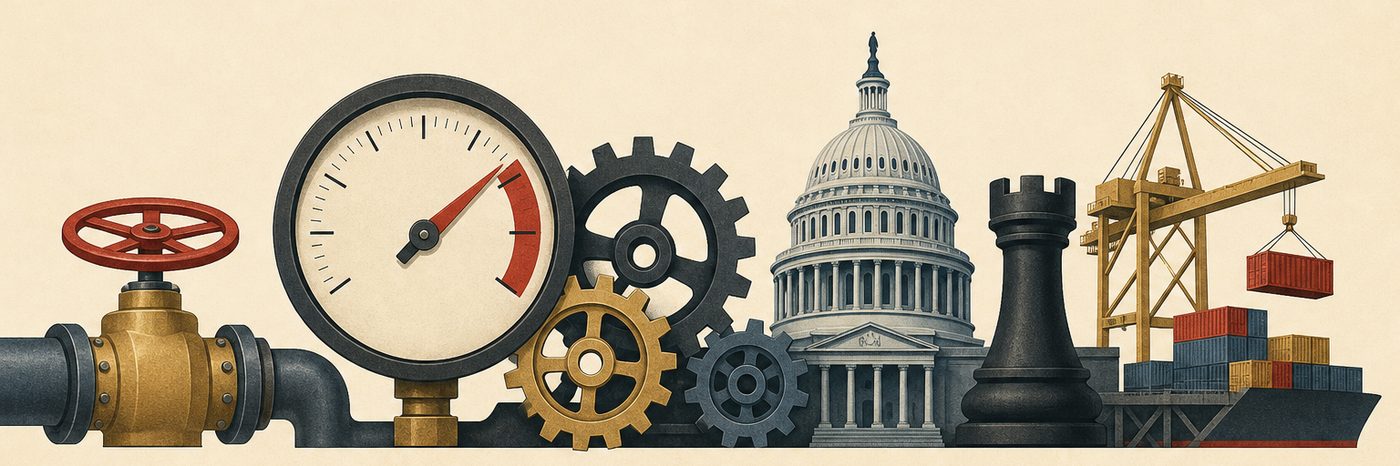
The Pressure Point: US-Iran Ceasefire and War Negotiations
-
The Situation: Mediators are now floating a specific upgrade to the April 8 ceasefire: a 60‑day extension tied to a Pakistan-drafted framework and—critically—gradual reopening of the Strait of Hormuz as a deliverable rather than a vague intention. Trump publicly moved from “ceasefire on life support” to “largely negotiated,” while multiple outlets report the remaining gaps are down to wording and sequencing. Iran, meanwhile, is treating this as a two-stage deal: lock the guns first, park the hardest issues (uranium limits, tolling/fees, broader regional fronts) for later. Net change: the negotiation is no longer about “ending the war” in principle; it’s about operational control of Hormuz reopening and who owns the compliance triggers. (Financial Times, Axios, AP, Euronews)
-
The Mechanism: - Hormuz reopening is the real escrow account. A “gradual reopening” forces the parties to define what counts as open: traffic volume, categories of cargo, inspection rules, convoying, and insurance/war-risk pricing. If those metrics aren’t pinned down, each side can claim compliance while throttling throughput. (Financial Times, CNBC) - Sequencing is the choke point, not signatures. The 30–60 day “window to negotiate details” is a classic mechanism for converting battlefield leverage into diplomatic leverage: you front-load what you can verify fast (reduced strikes, certain shipping lanes) and defer what’s slow/contestable (uranium stockpiles, inspection architecture). The side that controls the order of operations controls the deal. (Euronews, Bloomberg) - “Wording gaps” are actually enforcement gaps. In ceasefires, ambiguous language is not a bug—it’s the tool that lets both sides sell the deal domestically while preserving optionality to re-interdict shipping or resume strikes after a provocation. The enforcement reality becomes: who can prove a violation first, and who has the faster re-attack/retaliation loop. (Axios, NBC News) - Maritime insurance and routing are the timeline bottleneck. Even if Tehran “opens” lanes, shipping doesn’t normalize until underwriters re-price risk and owners redeploy hulls. That lag creates a dangerous incentive: Iran can offer symbolic openings that don’t move real barrels, while the US claims progress and delays kinetic action. (Shipping is a finance product before it’s a navigation problem.) (NPR, Bloomberg) - Mediator selection changes the compliance geometry. Pakistan drafting the framework shifts “guarantor” expectations toward military-to-military enforcement logic (deconfliction lines, incident attribution) rather than Western treaty formalism. That matters because Hormuz is an operational theater; the paper only works if someone can arbitrate incidents in hours, not weeks. (New York Times, Axios) - Politics (one pass): Trump’s public “48 hours / 50-50” posture is a bargaining weapon aimed at forcing concessions without paying the domestic cost of formally expanding the war—credible threat theater calibrated to gasoline and markets. (Axios, CBS News)
-
The State of Play: Reaction: Mediators (Pakistan, Qatar per prior reporting) are running shuttle diplomacy and pushing a short framework that can be announced fast while leaving technical annexes for later. The White House is simultaneously keeping a strike option “warm” (visible through repeated NSC-level meetings reported in US press) to preserve coercive pressure while it negotiates. Tehran is engaging at senior levels with mediators and signaling conditional progress—but continues to treat Hormuz control and uranium posture as non-surrender assets, i.e., things to be managed rather than given away. (CNN, New York Times, AP)
Strategy: The emerging structure is a ceasefire extension as a container for a manufactured “win” metric: measurable Hormuz reopening steps that markets can price and allies can message. The US wants “open and free” passage (no tolling regime, no precedent), while Iran wants to convert its ability to disrupt into a recognized gatekeeping role—even if that recognition is smuggled in through language on “coordination,” “safety,” or phased implementation. Everyone is trying to avoid the hard enforcement question: who decides whether a skirmish is a deal breach—because that party effectively holds the re-escalation trigger. (CNBC, Financial Times, Bloomberg)
-
Key Data: - 60 days: proposed ceasefire extension length under discussion. (Financial Times) - 30–60 days: reported negotiation window inside the Pakistan-drafted framework to finalize details. (Euronews) - April 8: start date of the current fragile ceasefire (per FT/CNBC reporting). (CNBC) - 48 hours: reported decision horizon cited by officials for whether the framework is signed/announced. (Euronews) - “50/50”: Trump’s stated odds of deal vs renewed strikes. (Axios)
-
What's Next: The next hard trigger is the mediators’ delivery of the Pakistan-drafted framework text for final acceptance—with multiple reports pointing to a decision/announcement window within ~48 hours from May 23. Watch for the first concrete annex: an implemented Hormuz reopening step (designated corridor, inspection protocol, or a verified traffic increment) because that is the only move that converts paper into market reality; if that step isn’t specified in the framework as written, the “60-day extension” will function as a delay instrument rather than a stabilization instrument. (Financial Times, Euronews, Axios)
For the full dashboard and real-time updates, visit whatsthelatest.ai.