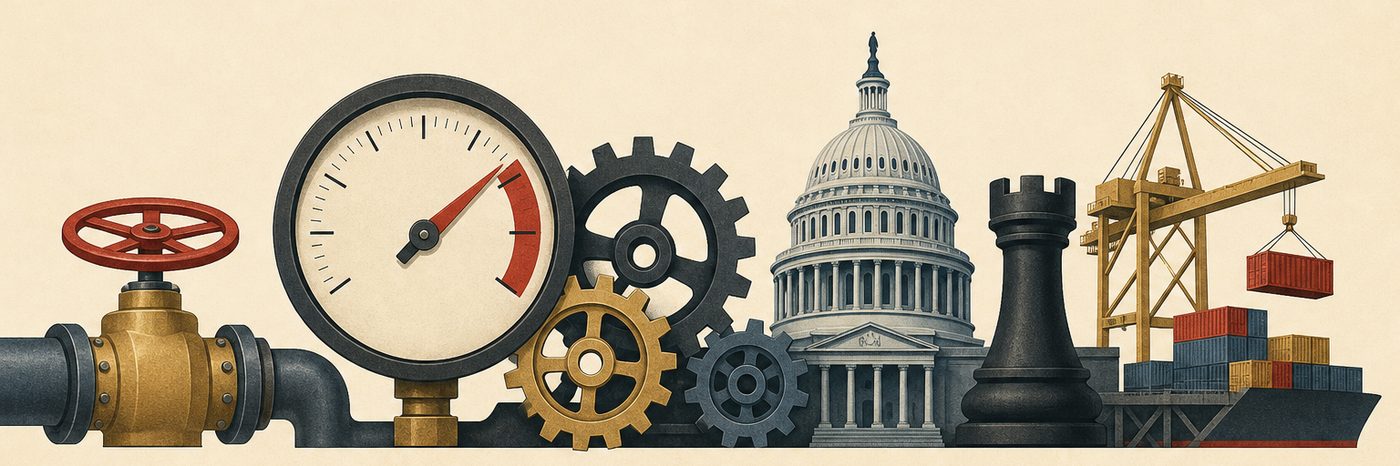
The Pressure Point: US Military and Anthropic AI Dispute
-
The Situation: Defense Secretary Pete Hegseth has summoned Anthropic CEO Dario Amodei to the Pentagon Tuesday after DoD escalated from contract haggling to explicit coercion: accept “all lawful purposes” usage or lose access to the defense market. The new move is not just termination-threat theater—DoD is floating a “supply chain risk” designation that would force primes and subcontractors to purge Anthropic tooling to stay eligible for Pentagon work. That turns a $200M services dispute into an ecosystem-wide compliance event. In parallel, Anthropic went public with claims that Chinese labs ran “industrial-scale distillation” against Claude using 24,000 fake accounts—raising the odds that Washington treats model access itself as a controlled defense-relevant commodity. (Axios, NYT, TechCrunch)
-
The Mechanism: - “All lawful purposes” is a liability transfer clause. It externalizes downstream misuse risk (autonomous targeting, surveillance, contractor misapplication) from DoD onto the vendor by forcing the vendor to either (a) allow it and own the reputational/employee/regulatory blast radius, or (b) refuse and be framed as non-cooperative. That clause is the contract’s real weapon. (Axios, NYT) - “Supply chain risk” is a market-death switch because primes are the choke point. If DoD pushes even an informal certification regime (“attest you don’t use Claude”), integrators (Palantir-type stacks, SI’s, cloud resellers) will over-comply to protect their clearance pipeline and contract eligibility. Anthropic doesn’t need to be banned everywhere—just made too costly to touch. (WSJ, Semafor) - DoD is trying to collapse “model policy” into procurement policy. If labs can carve out autonomy/surveillance prohibitions, they become de facto rule-makers for military adoption. DoD’s counter is to treat restrictions as non-performance—making “values-based constraints” incompatible with doing business. (Wired, Axios) - Operational dependence is the time bomb: Claude is already inside missions and workflows. Once a model is embedded (planning aids, intel triage, logistics, targeting-adjacent decision support), ripping it out is a retraining + integration rewrite problem, not a procurement memo. That creates a perverse incentive for DoD to threaten bans while quietly seeking continuity paths through contractors or alternate labs. (Axios, NBC News) - The Chinese “distillation” claim reframes safeguards as national-security leakage. If frontier capability can be siphoned via fake accounts at scale, the policy center of gravity shifts from “ethics of use” to “control of access,” which empowers DoD’s argument that it needs broader, not narrower, usage rights to harden and adapt models in contested environments. (TechCrunch, NYT) - (Politics—one pass) The administration’s incentive is to make one prominent lab an example so the other frontier vendors price in compliance before they bargain. (Axios)
-
The State of Play: Reaction: DoD is no longer negotiating at the contracting-officer layer; it’s pulling the CEO into a top-cover meeting and leaking “supply chain risk” language to shape vendor behavior across the base. Anthropic is counter-positioning by emphasizing catastrophic misuse risk (chemical weapons, “heinous crimes”) and foreign extraction attempts to justify tighter controls and monitoring. The primes and consultancies are the immediate executors: they will start mapping where Claude is in their delivery toolchains because they’re the ones who eat the compliance cost first if DoD formalizes a purge.
Strategy: DoD’s optimal outcome is not “no Anthropic,” it’s precedent: a contract template where the government, not the lab, defines lawful scope and downstream accountability. Anthropic’s optimal outcome is not “winning the argument,” it’s granularity—carve-outs that are narrow enough to sell as safety, but not so restrictive that DoD can label the company operationally unreliable. The hidden board is procurement industrialization: whoever becomes the “safe default” on genai.mil-style rails captures long-tail integrations, and that compounding distribution advantage matters more than the headline $200M. (Semafor, Axios, NYT)
-
Key Data: - $200,000,000 — maximum value of Anthropic’s Pentagon contract reportedly at stake. (NYT) - 24,000 fake accounts — Anthropic’s stated scale of alleged Chinese access used for distillation. (TechCrunch) - 16,000,000+ exchanges — Anthropic’s stated volume of interactions generated through those accounts. (TechCrunch) - Tuesday morning — scheduled Hegseth–Amodei meeting at the Pentagon (earliest hard decision point). (Axios)
-
What’s Next: The trigger is the post-meeting procurement action: either (a) DoD issues written guidance to contracting officers and primes (a certification requirement or exclusion language) or (b) it quietly amends Anthropic’s performance terms to embed “all lawful purposes” scope. Expect the first concrete signal within 72 hours after Tuesday’s meeting—a memo, a contract modification, or a prime-facing compliance ask—because primes need lead time to attest and retool, and DoD’s leverage decays if contractors keep deploying Claude by inertia. The tell isn’t headlines; it’s whether integrators start demanding written attestations from subs and vendors.
For the full dashboard and real-time updates, visit whatsthelatest.ai.